

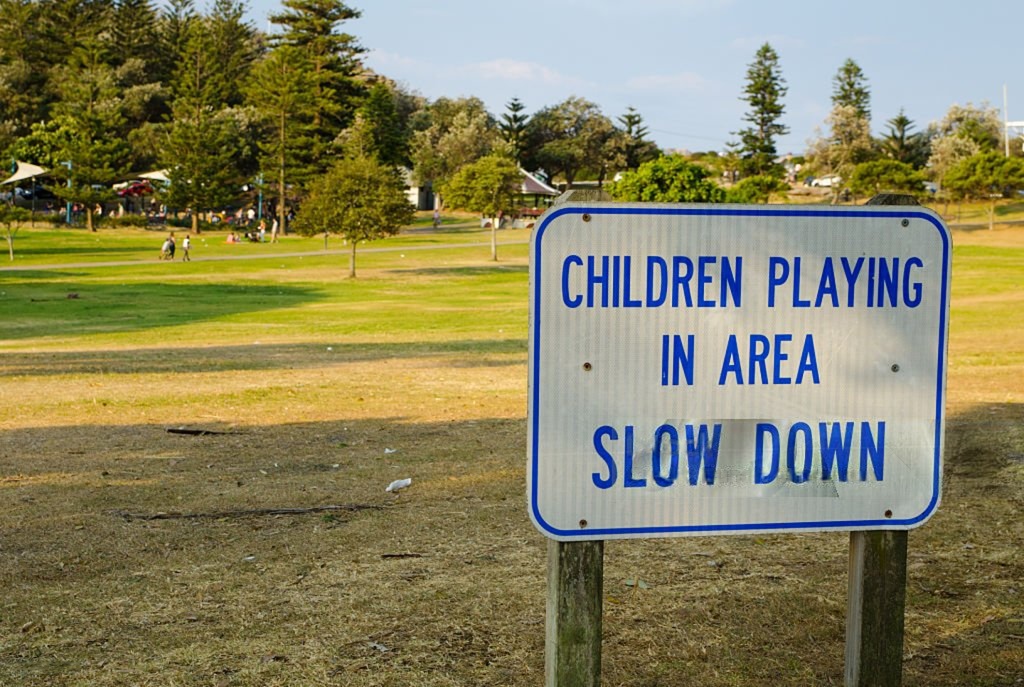
Picture a sunny Saturday morning at your local park. Kids are laughing, parents are chatting over coffee, and the playground hum is exactly what it should be — carefree. But just beyond the fence, a delivery van reverses without warning, or a driver cuts through the carpark at speed. In a split second, that idyllic scene becomes a near-miss.
This is not a hypothetical. It happens across Australian communities every week. While most parents and councils focus heavily on the physical design of play equipment, the environment surrounding a playground — particularly vehicle movement — often receives far less attention. This blog explores why traffic management is an inseparable part of keeping children safe, how it connects to playground safety regulations Australia, and what councils, schools, and developers can do to close this dangerous gap.
The Regulations Behind the Playground
Australia takes playground safety seriously. The primary standard governing equipment and design is AS 4685, a suite of standards covering everything from equipment height and fall zones to materials and maintenance. These guidelines are enforced at state and local government levels, and compliance is non-negotiable for councils, schools, and commercial operators alike.
Yet here is the gap that often surprises people: AS 4685 and related playground safety regulations Australia focus predominantly on the play equipment itself. They address impact-absorbing surfaces, structural integrity, entrapment risks, and age-appropriate design. What they do not fully prescribe is how vehicles should be managed in the adjacent environment.
This means a playground can be technically compliant — tick every box under the relevant Australian standard — and still have an uncontrolled carpark running three metres from the gate. Compliance and true safety are not always the same thing. Bridging that gap requires thinking beyond the equipment and treating the entire precinct as a safety zone.
Why Children and Traffic Are a Dangerous Mix
Children process the world differently from adults. Their field of vision is narrower, their attention is easily consumed by play, and their ability to judge vehicle speed and distance is developmentally limited well into primary school age. They dart, they chase, they follow a ball without looking. These are not flaws — they are simply what childhood looks like.
Drivers, on the other hand, do not always anticipate this unpredictability. A vehicle travelling at even 20 km/h can cause serious injury. When carparks, access roads, or service lanes sit close to playground areas without adequate separation, the conditions for tragedy are already in place.
The risks are compounded in several common scenarios:
- Schools and childcare centres where drop-off traffic surges at predictable times and drivers are often distracted or rushed
- Public parks where informal carparks have grown over time without clear pedestrian pathways
- Playgrounds within shopping centres or mixed-use developments where service vehicles share space with families
- Community events where temporary increases in foot traffic overwhelm existing infrastructure
None of these situations are unusual. All of them are manageable — with the right planning.
What Traffic Management Actually Involves
Traffic management is not just a cone and a hi-vis vest. In the context of playgrounds and public spaces, it is a discipline that combines physical design, signage strategy, operational planning, and — where necessary — trained human oversight.
Physical Measures
These are the most visible elements and often the most immediately effective:
- Perimeter fencing that creates a genuine buffer between the play area and any vehicle access point
- Bollards positioned to prevent vehicles from mounting footpaths or cutting through pedestrian zones
- Speed humps and raised thresholds near playground entries to slow vehicles before they reach peak foot-traffic zones
- Clearly delineated pedestrian crossings with high-visibility markings between carpark areas and play zones
Signage and Communication
Effective signage is not about quantity — it is about placement and clarity. Drivers need to be warned in advance of playground areas, not just at the point of risk. Recommended approaches include:
- Warning signs positioned 50 to 100 metres before a playground entrance on approach roads
- Reduced speed limit signage (typically 10 km/h in car parks) with clear enforcement framing
- Child-crossing indicators at pedestrian pathways, particularly those that cross vehicle access routes
- No-entry or restricted-access signage for service vehicle routes during peak play hours
Traffic Flow Design
Where possible, the most powerful solution is simply keeping vehicle and pedestrian routes separate from the outset. Playground precincts benefit from:
- Dedicated car parks positioned away from play areas, with clear pedestrian pathways leading from parking to the playground
- One-way traffic flows that reduce conflict points within carparks
- Drop-off zones positioned well away from playground gates, reducing the mix of moving vehicles and walking children
Temporary Traffic Management
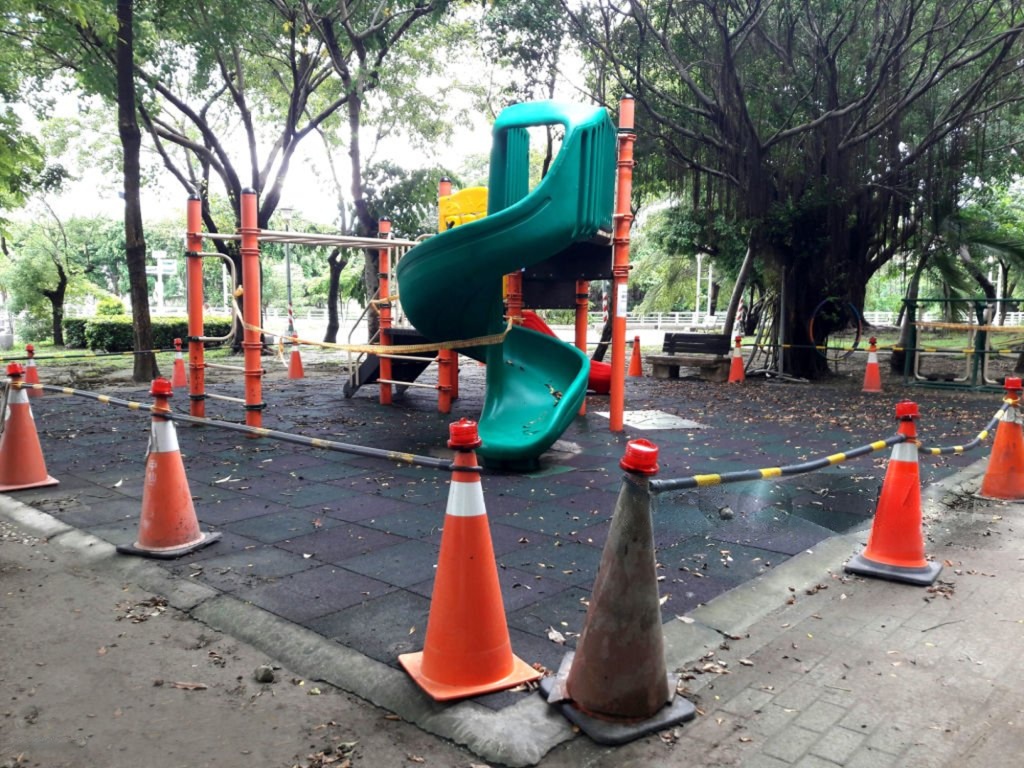
For playground construction, upgrades, or major maintenance, temporary traffic management becomes essential. Work sites adjacent to play areas introduce heavy vehicles, reversing equipment, and temporary access routes that require professional management. This is where engaging qualified traffic management companies Adelaide becomes critical — not just for compliance, but for genuine risk elimination during works.
The Case for Safe Playground Solutions That Think Beyond Equipment
The most thoughtfully designed play equipment in the world cannot protect a child who runs into an unsecured carpark. Safe playground solutions, properly understood, extend to the full precinct — the sightlines from equipment to access roads, the distance between car parks and gates, the presence or absence of barriers.
There are several ways this holistic thinking plays out in practice.
Risk Assessment as a Starting Point
Before any physical intervention, a proper risk assessment of the site should be conducted. This involves mapping all vehicle access points relative to the play area, identifying peak usage periods and the traffic loads they bring, and assessing existing infrastructure for gaps. A good risk assessment will surface problems that are not immediately obvious — a delivery route that becomes a hazard only at 8am on school days, or a sightline obscured by seasonal vegetation.
Designing in Buffers
Where sites are being developed or upgraded, the single most effective measure is distance. A playground surrounded by landscaping, berms, or structured pathways that create genuine separation from vehicle zones is fundamentally safer than one separated only by a fence line. When councils and developers incorporate this thinking at the design stage, they reduce the ongoing burden of operational management.
Community Awareness
Infrastructure alone does not change behaviour. Schools, councils, and community groups benefit from pairing physical measures with communication — reminding parents about drop-off protocols, signage about school zone speed limits, and clear guidance for event organisers about temporary access restrictions during high-attendance days.
During Construction: The Most Critical Window
One of the most overlooked risk periods for playground safety is during construction or major upgrades. This is when standard pedestrian flow is disrupted, heavy vehicles operate nearby, and existing safety infrastructure may be temporarily removed.
A professional traffic management plan for playground construction should address:
- Clear demarcation between the work zone and any areas still accessible to the public
- Controlled access for construction vehicles, with defined entry and exit routes that avoid pedestrian zones
- Warning signage visible to parents and children approaching the site from all directions
- A schedule of work that, where possible, limits heavy vehicle movements to off-peak hours
- A traffic controller on site during particularly complex stages of access — especially where pedestrians cannot be fully rerouted
Councils and contractors who skip this planning often do so because they perceive it as an additional cost. In reality, the cost of an incident — legal, reputational, and human — far exceeds the investment in proper planning.
Best Practice: A Checklist for Playground Operators
Whether you manage a school, a council park, or a community recreation space, the following checklist reflects current best practice:
- Conduct a vehicle and pedestrian risk assessment of the entire precinct, not just the equipment
- Ensure physical separation between car parks and play areas — fencing, bollards, or landscaping
- Install appropriate signage at all vehicle approach points, including speed limit reminders
- Define and mark pedestrian pathways from parking areas to playground gates
- Review traffic management arrangements seasonally and ahead of major events
- Engage a qualified provider for any temporary traffic management during construction or maintenance
- Keep records of risk assessments and any corrective actions taken — this supports compliance and demonstrates due diligence
- Brief parents and regular users about drop-off protocols and any temporary changes to access routes
A Safer Space Requires a Wider View
Playgrounds are among the most important community assets we have. They are where physical development happens, where friendships form, where children learn independence. They deserve the full extent of our safety thinking — not just the part we can measure with a tape measure against a standard.
Traffic management is not an afterthought to playground safety. It is a core component of it. The families who use these spaces every day deserve to approach them knowing that the path from the carpark to the swings is as safe as the swings themselves.
By combining compliance with playground safety regulations Australia with thoughtful physical design, proper signage, and professional support for construction and upgrades, councils and operators can deliver on that promise.
Need Expert Traffic Management Near a Playground?
One Stop Traffic Solutions works with councils, schools, and developers across Australia to deliver compliant, practical traffic management plans for playground precincts — including full support during construction and upgrades.
Whether you are planning a new playground, upgrading an existing facility, or simply want a professional eye on your current setup, our team can help you identify risks and implement the right solutions.
Contact us today: onestoptrafficsolutions.com.au
Serving communities across Adelaide, South Australia, and nationwide.