

Introduction
When a water main bursts at 2 AM, a gas leak halts a busy intersection, or a power outage plunges a suburb into darkness, every minute counts. Emergency utility works are unplanned, high-risk events that demand an immediate, coordinated response — not just from utility crews, but from professional traffic management teams working alongside them. Without rapid-response utilities traffic management, these incidents can quickly spiral into dangerous situations for the public, emergency responders, and road users alike.
Unmanaged traffic near active utility emergencies creates serious hazards: vehicle collisions with exposed work sites, delayed access for ambulances and fire trucks, and potential mass disruption across key arterial routes. The consequences of getting it wrong can be catastrophic and costly.
One Stop Traffic Solutions is a trusted provider of 24/7 emergency utilities traffic management across metropolitan Australia. Our experienced teams are ready to mobilise at a moment’s notice — day or night — delivering compliant, safe, and efficient traffic control when it matters most.
What is Utilities Traffic Management in Emergency Situations?
Utilities traffic management refers to the planning, deployment, and coordination of traffic control measures around utility infrastructure works — including water, gas, electricity, and telecommunications projects. Its purpose is to protect both the public and on-site workers while minimising disruption to the surrounding road network.
There is a critical distinction between planned works and emergency works. Planned utility projects allow time for detailed traffic management plans (TMPs), community notifications, and staged approvals. Emergency utility works, by contrast, arise without warning and require immediate action — often within minutes or hours of an incident being reported.
In these high-risk scenarios, utility traffic solutions must be deployed rapidly and precisely. Traffic controllers, signage, barriers, and coordination with local authorities must all be activated at once to create a safe working corridor while maintaining as much traffic flow as possible around the affected area.
Why 24/7 Response is Critical for Emergency Utility Works
Emergency utility incidents do not wait for business hours. A burst water main on a motorway at midnight, a gas explosion near a school during morning peak hour, or a power failure affecting traffic signals across a CBD — these events require around-the-clock readiness. Here is why 24/7 response capability is non-negotiable:
- Immediate Hazard Control: The moment a utility emergency occurs, the surrounding area becomes a potential hazard zone. Rapidly establishing traffic control zones prevents vehicles from entering dangerous areas and keeps emergency crews safe while they work.
- Public and Worker Safety: Traffic controllers act as the first line of defence on the road. Their presence reduces the risk of accidents, ensures pedestrian safety, and creates a protected work zone for utility technicians operating in stressful, high-pressure conditions.
- Minimising Traffic Disruption: A well-managed emergency traffic response keeps vehicles moving — even if it means detours or temporary lane closures. Without professional management, gridlock, road rage incidents, and secondary accidents are far more likely.
- Compliance with Australian Regulations: All traffic management activities in Australia must comply with state-specific legislation and standards, including the Traffic Management for Works on Roads guidelines and AS 1742.3. Even in emergencies, compliance cannot be overlooked — failure to follow the correct procedures exposes utility companies, contractors, and councils to significant legal and financial liability.
- Metro Utility Traffic Services On Demand: Our metro utility traffic services ensure that no matter where an emergency occurs within metropolitan areas, we can have qualified traffic controllers on-site quickly, with the right equipment and documentation in place.
Key Components of Emergency Utilities Traffic Management
Effective emergency traffic management is not a single action — it is a coordinated suite of responses deployed simultaneously. Here is what professional emergency utility works traffic management involves:
Rapid Deployment of Traffic Controllers
Speed is everything in an emergency. One Stop Traffic Solutions maintains on-call traffic controllers across metropolitan areas, ready to be dispatched within short timeframes of receiving a callout. Our controllers are fully licensed, experienced in high-pressure environments, and trained to establish safe work zones quickly and efficiently — even in the dark, in adverse weather, or on high-speed roads.
Temporary Traffic Management Plans (TMPs)
Even in emergencies, compliant documentation is required. Our team prepares rapid Temporary Traffic Management Plans that meet regulatory requirements and can be submitted for fast-track approval with local councils and road authorities. These plans are adaptable — as the emergency situation evolves, so does the TMP, with real-time adjustments made in the field to reflect changing conditions.
Traffic Control Equipment & Signage
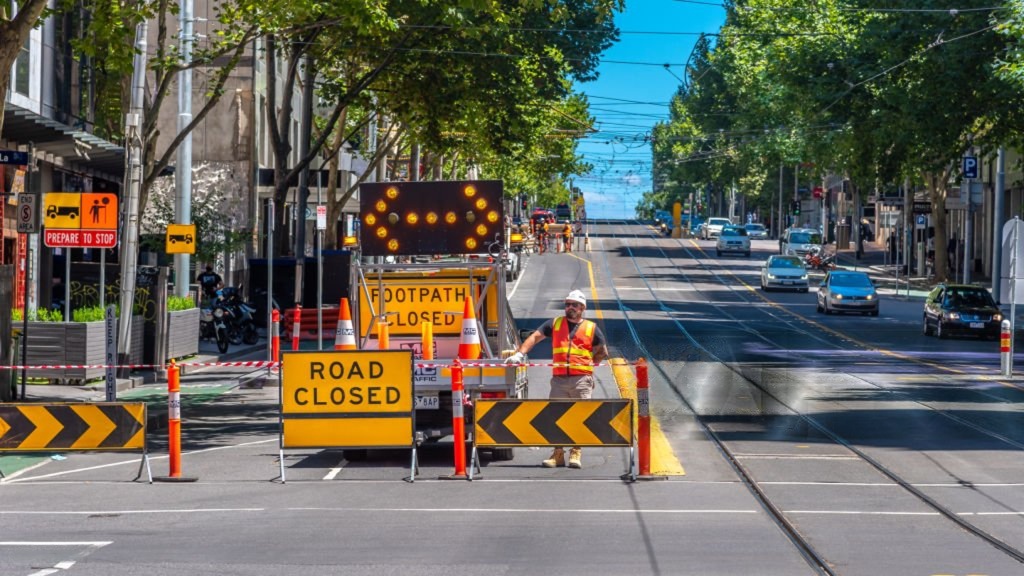
Our emergency response vehicles carry a full complement of traffic control equipment, including safety barriers and water-filled crash cushions, traffic cones and delineators, Variable Message Signs (VMS boards) to alert approaching drivers, road closure and detour signage, flashing lights and night-visibility equipment. Having the right equipment on hand — and knowing how to deploy it fast — is what separates a professional utility traffic solutions provider from an ad-hoc response.
Coordination with Authorities
Major utility emergencies often require multi-agency coordination. Our team works directly with local police, council traffic engineers, emergency services (fire, ambulance, SES), and utility companies to ensure a unified, safe, and efficient response. Clear communication between all parties is essential to managing complex sites where multiple agencies may be operating simultaneously. Our experience with metro utility traffic services means we understand how to navigate these relationships quickly and professionally.
Common Emergency Utility Scenarios Requiring Traffic Management
Emergency utility works can arise from a wide range of infrastructure failures. Each scenario presents unique challenges for traffic management teams:
- Water Main Bursts: Flooding caused by burst water mains can make roads impassable and dangerous. Traffic management teams must quickly close affected lanes, redirect traffic, and create safe access for water utility crews working under extreme pressure.
- Power Outages: When power failures take out traffic signals, intersections become uncontrolled and extremely hazardous. Traffic controllers are deployed immediately to manually direct traffic and prevent accidents, particularly during peak hours.
- Gas Leaks: Gas leak incidents require immediate road closures and evacuation zones. Traffic management must work hand-in-hand with gas utility crews and emergency services to keep vehicles and pedestrians well clear of the danger area.
- Telecommunications Failures: Damaged underground cables or telecommunications infrastructure often require urgent excavation in busy roads or footpaths. Traffic management ensures that repair crews can work safely while maintaining pedestrian and vehicle flow.
- Sewer System Issues: Sewer collapses, blockages, or overflows can compromise road surfaces and require emergency excavation. These works often occur in residential streets or busy arterials, requiring careful traffic management to protect both the public and the repair crew.
Benefits of Professional Utility Traffic Solutions
Engaging a professional emergency traffic management provider like One Stop Traffic Solutions delivers measurable benefits across every dimension of an emergency response:
- Faster Response Times: With 24/7 on-call teams and strategically located resources, we minimise the time between incident notification and boots on the ground — reducing the window of unmanaged risk.
- Reduced Liability: Working with a fully licensed and insured traffic management company protects utility companies, councils, and contractors from regulatory non-compliance penalties and litigation arising from traffic incidents near work sites.
- Improved Safety Outcomes: Professional traffic controllers are trained to manage real-world, high-pressure scenarios. Their presence significantly reduces the risk of accidents, injuries, and fatalities in and around emergency work zones.
- Compliance with Australian Standards: All our operations are conducted in accordance with the relevant state and national guidelines for traffic management on roads. This includes proper documentation, approved equipment, and certified personnel — even in the most urgent situations.
- Efficient Traffic Flow Management: Our experienced teams design and implement the most effective traffic management strategies for each unique scenario, keeping roads moving wherever possible and minimising the downstream impact on the broader network.
Why Choose One Stop Traffic Solutions?
When an emergency strikes, you need a traffic management partner you can trust without hesitation. Here is why utility companies, councils, and emergency services across metropolitan Australia rely on One Stop Traffic Solutions:
- 24/7 Availability: Our emergency response line is active around the clock, every day of the year. No matter when a utility emergency occurs, our team is ready to respond immediately.
- Experienced Team: Our traffic controllers and management professionals bring years of real-world experience across a wide range of emergency and planned utility works — from minor road adjustments to complex multi-agency incidents.
- Fast Mobilisation Across Metro Areas: We maintain strategic resources across metropolitan areas to ensure the fastest possible response times to emergency callouts, regardless of location.
- Fully Compliant Metro Utility Traffic Services: Every aspect of our service — from traffic controllers to TMPs to equipment — meets or exceeds Australian regulatory requirements. Our metro utility traffic services are trusted by some of Australia’s leading utility providers.
- Proven Track Record: We have successfully managed hundreds of emergency utility traffic scenarios across metropolitan areas, earning a reputation for reliability, professionalism, and results under pressure.
Frequently Asked Questions
Q1: How quickly can traffic management teams respond to emergencies?
Response times vary depending on location and the resources required, but One Stop Traffic Solutions is structured for rapid deployment. In most metropolitan areas, we can have traffic controllers on-site within a short timeframe of receiving an emergency callout. Our 24/7 availability ensures there is no delay waiting for business hours — our teams are always ready.
Q2: Is traffic management required for all utility emergencies?
In most cases, yes. Any utility emergency that affects a public road, footpath, or area near traffic requires some form of traffic management to comply with Australian workplace health and safety laws and road traffic regulations. The scale of the response will vary — a minor cable fault in a quiet residential street requires different measures than a burst water main on a major arterial road — but professional traffic control is nearly always required.
Q3: What areas do you cover for metro utility traffic services?
One Stop Traffic Solutions provides metro utility traffic services across major metropolitan areas in Australia. Contact us directly to confirm coverage in your specific area or region — we are continually expanding our service footprint to meet demand.
Q4: Do you provide traffic control equipment as well?
Yes. Our emergency response teams arrive fully equipped with all necessary traffic control equipment, including barriers, cones, signage, VMS boards, and lighting. You do not need to source equipment separately — we provide a complete, end-to-end emergency traffic management service.
Conclusion
Emergency utility works are, by their very nature, unpredictable. What is entirely predictable, however, is the need for fast, professional, and compliant traffic management the moment an incident occurs. Whether it is a burst water main flooding a major road at dawn or a gas leak requiring urgent road closures during the evening commute, the quality of your traffic management response directly impacts the safety of the public, the efficiency of the repair crew, and your exposure to liability.
At One Stop Traffic Solutions, we have built our entire service model around being ready when it matters most. Our 24/7 utilities traffic management capabilities, experienced teams, and proven metro utility traffic services make us the partner of choice for utility companies, emergency services, and local governments across metropolitan Australia.Do not leave your emergency response to chance. When speed, compliance, and safety are non-negotiable — trust the experts.