Starting out in traffic control can feel like a lot to take in. There are courses to compare, certifications to understand, and a whole set of on-site responsibilities that come with the job. If you’re looking at a traffic management course in Adelaide and want to know what you’re actually signing up for — not just a list of modules — this guide is for you.
We’ll walk through what the training experience looks like from day one, how to know if you’re choosing the right course, and what comes next once you’ve got your certification in hand.
Before You Enrol: Questions Worth Asking
Most people searching for courses have the same underlying question: Is this going to be worth my time and money?
That’s fair. Here’s how to think through it before you commit.
Do you actually need formal certification?
In South Australia, anyone directing vehicles or pedestrians on or near a public road in a work zone is required to hold the appropriate certification. This isn’t a grey area — working without it puts you, your employer, and the public at risk. If your work brings you anywhere near roadworks, construction sites, or public events with live traffic, the answer is yes.
Is this a career starting point or an add-on to existing work?
The answer changes how you approach your training. If you’re brand new to the industry, you’ll want a course that gives you grounding in the basics — how traffic management plans work, what signage means, how to communicate on site. If you’re already working in construction or utilities and adding traffic control to your role, a more focused program targeting specific competencies might suit you better.
Who delivers the training, and does it matter?
It does. A course delivered by people who’ve managed real traffic situations is fundamentally different from one taught purely from a textbook. The practical scenarios, the way questions get answered, the tips that only come from experience — these things add real value. When you’re looking at providers, find out who your trainer will be, not just what the course covers.
What the Training Actually Looks Like
A traffic management course in Adelaide isn’t spent sitting in a classroom reading slides. Good training blends theory with hands-on practice — and the balance between the two matters.
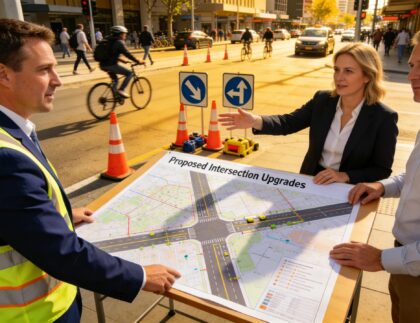
Day one usually covers the foundations. You’ll work through South Australian road regulations, the legal framework that governs traffic control, and how to read and understand a traffic management plan. This part is important not just for passing an assessment — it’s what you’ll draw on every time you step onto a live site.
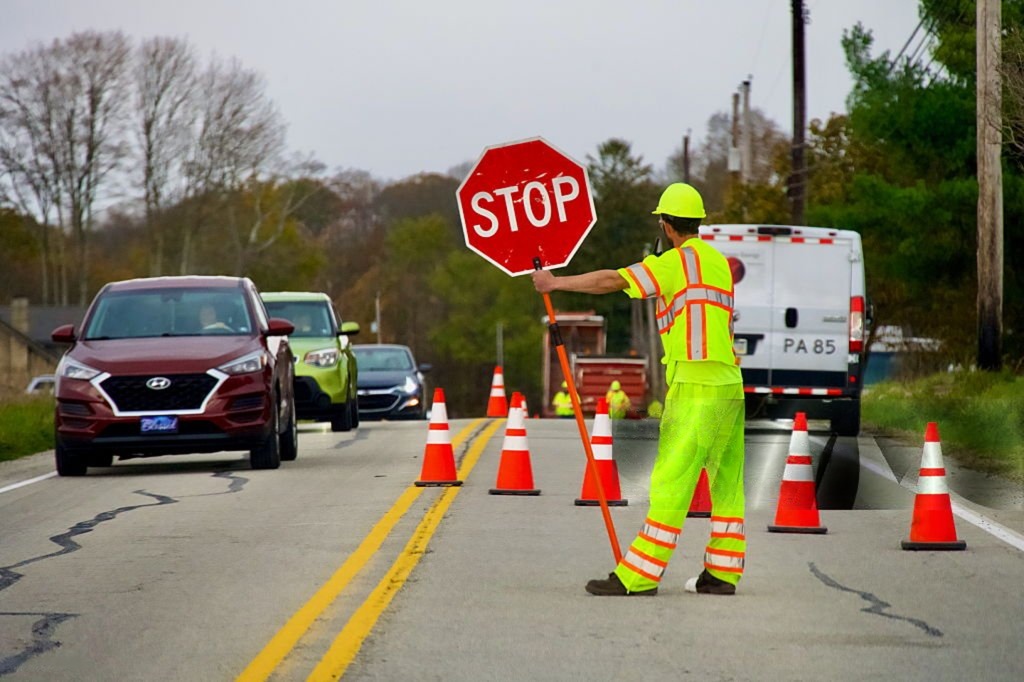
The practical component is where it clicks. Setting up cones and signage in a controlled environment, practising stop/slow bat techniques, learning how to communicate with other controllers and with drivers — these things feel abstract on paper and become instinctive once you’ve done them with your hands. A course that skips or shortchanges this component is one to avoid.
Scenario-based learning fills in the gaps. Good trainers run you through situations that don’t follow the textbook: a driver who ignores your signals, a pedestrian who wanders into a work zone, an emergency vehicle that needs to get through. Knowing how to respond in the moment — calmly and correctly — is what separates a competent traffic controller from a nervous one.
Assessment is practical, not just written. You’ll need to demonstrate that you can do the job, not just answer questions about it. Most reputable courses will assess you on both your understanding of the regulations and your ability to apply them on site.
The Skills You Build — And Why They Transfer
One thing people don’t always expect: traffic control training builds skills that go well beyond holding a bat on a road.
Hazard awareness becomes second nature. You learn to read an environment — where the risks are, how they change as work progresses, what changes need to be communicated and to whom. This is directly useful in any safety-critical workplace.
Communication under pressure. A busy worksite with heavy machinery, pedestrians, and live traffic moving through it requires clear, calm communication. You’ll practise giving and receiving instructions clearly, using hand signals and radio, and managing situations where you need to make quick decisions.
Understanding of compliance requirements. South Australia’s regulations around work zones are specific, and working within them correctly protects everyone on site. Understanding not just what to do but why it’s required makes you a much more effective worker — and a more valuable one to employers.
Confidence. This one doesn’t appear on any training syllabus, but it’s real. People who’ve completed proper traffic control training in Adelaide consistently say that the practical experience is what makes them feel genuinely ready to step onto a live site. That confidence comes from having practised the scenarios, made mistakes in a safe environment, and been corrected by someone who knows what they’re talking about.
What Certification Means for Your Career
Getting certified opens doors — but it’s worth understanding exactly what your certificate represents and what employers are looking for.
Your certification confirms that you’ve completed training that meets Australian standards. It’s nationally recognised, which means it’s valid across states — useful if you work on projects in multiple locations or move around for work.
Employers in construction, utilities, civil infrastructure, and events consistently list traffic control certification as a prerequisite for site roles. On larger projects managed by councils or government bodies, it’s non-negotiable. Even for subcontractors, being able to show a current and valid certificate is often what gets you through the door.
What experienced site managers look for beyond the certificate is practical readiness. They want to know you’ve had real training — not a box-ticking exercise — and that you understand your responsibilities on site. That’s why choosing quality training from a reputable traffic management company matters from a career standpoint as much as a safety one.
Keeping Your Certification Current
This is something a lot of people don’t think about until it’s too late: traffic control certification doesn’t last forever.
In South Australia, certified traffic controllers are expected to keep their knowledge current through periodic refresher training. Regulations change, standards are updated, and best practice evolves — so ongoing education isn’t just a bureaucratic requirement. It’s how you stay genuinely competent.
Refresher courses are shorter than initial certification programs — typically a day or less — and focus on what’s changed rather than going back over everything from the start. If you work in traffic control regularly, building this into your calendar every few years is simply part of the job.
If you’re not sure whether your current certification is still valid, the safest approach is to check with your training provider or the relevant authority before you next step onto a regulated worksite.
Choosing the Right Course in Adelaide
There’s no shortage of options, which makes the decision feel harder than it needs to be. Here’s a practical way to narrow it down.
Look for industry-connected trainers. The best traffic control course in Adelaide is one delivered by people who are actively working in traffic management — not just teaching it. Real-world context makes the training more relevant and the assessment more meaningful.
Check what’s included in the practical component. Ask specifically how much time is spent on hands-on training versus classroom instruction. A reputable provider will be happy to tell you. If the answer is vague, that’s informative in itself.
Consider the support available after the course. Can you ask questions once you’re out on site? Is there access to refresher training when the time comes? Is there someone you can call if you’re unsure about a compliance question? An established provider offers more than just a certificate — they’re a resource you can come back to.
Group and employer enrolments. If you’re a business looking to train a team, many providers offer group pricing and can tailor the schedule to suit your operations. This makes it practical to train a whole crew without pulling everyone off the job at once.
Ready to Take the Next Step?
Getting your certification through a quality traffic management course in Adelaide doesn’t have to be complicated. The process is straightforward — enrol, complete the training, pass your assessments, and walk away with a nationally recognised qualification.
What matters is choosing a provider who gives you real preparation for real sites — not just a piece of paper.
One Stop Traffic Solutions delivers traffic control training in Adelaide with experienced trainers and a practical focus on what the job actually requires. Whether you’re starting out or looking to keep your skills current, get in touch to find out what’s available and when the next course runs.