If you work in or around traffic control, you’ve almost certainly come across the terms “risk assessment” and “risk management.” They’re often used interchangeably, but they actually refer to two distinct — though closely connected — parts of the safety process. Understanding the difference isn’t just a technical detail; it directly affects how safely a worksite or road project is run.
Whether you’re new to the industry or simply want a clearer understanding of how safety processes work, this guide breaks down exactly what each term means, how they work together, and why both matter so much when it comes to keeping workers and the public safe on our roads.
What Is a Risk Assessment?
A risk assessment is the process of identifying potential hazards in a given environment, evaluating how likely they are to cause harm, and determining how severe that harm could be. Think of it as the investigative stage — it’s about asking, “What could go wrong here, and how bad could it be?”
In the context of risk assessment in Adelaide worksites, this typically involves physically inspecting a location, identifying hazards such as moving vehicles, poor visibility, uneven surfaces, or proximity to live traffic, and then documenting each one along with its likelihood and potential consequences.
A good risk assessment answers several key questions:
- What hazards exist in this environment?
- Who could be harmed, and how?
- How likely is it that this hazard will cause an incident?
- How severe would the outcome be if it did?
- What existing controls are already in place?
The output of a risk assessment is essentially a snapshot — a clear, documented picture of the risks present at a particular time and place.
What Is Risk Management?
Risk management is the broader, ongoing process that uses the information from a risk assessment to actually do something about the hazards identified. While a risk assessment identifies and evaluates risk, risk management is about controlling, reducing, monitoring, and reviewing that risk over time.
Risk management includes:
- Deciding on appropriate control measures for each identified hazard
- Implementing those controls — whether that’s signage, barriers, traffic controllers, or speed restrictions
- Communicating risks and controls to everyone involved on site
- Monitoring whether the controls are working effectively
- Reviewing and updating the approach as conditions change
In short, if a risk assessment is the diagnosis, risk management is the treatment plan and the ongoing care that follows.
Breaking Down the Relationship Between the Two
It helps to think of risk assessment and risk management as two parts of a continuous cycle rather than two separate, unrelated activities.
Step 1 — Identify: A risk assessment is carried out to identify hazards present in a particular environment, such as a road project, construction zone, or event site.
Step 2 — Evaluate: Each hazard is evaluated based on likelihood and potential severity, helping prioritise which risks need the most urgent attention.
Step 3 — Control: This is where risk management takes over. Based on the assessment, appropriate control measures are selected and put in place.
Step 4 — Monitor and Review: Risk management continues well beyond the initial setup. Conditions on a worksite or road change constantly — traffic volume shifts, weather changes, machinery moves — so controls need to be monitored and adjusted accordingly.
Step 5 — Reassess: As situations evolve, a new or updated risk assessment may be required, restarting the cycle.
This cyclical relationship is particularly relevant in environments where conditions are constantly changing, such as active road works or temporary traffic control points.
Why This Distinction Matters in Traffic Control
Traffic control environments are uniquely dynamic. A worksite might be safe in the morning but face entirely different risks by the afternoon due to changing traffic flow, weather conditions, or equipment movement. This is exactly why both processes need to work hand-in-hand rather than being treated as a single, one-off task.
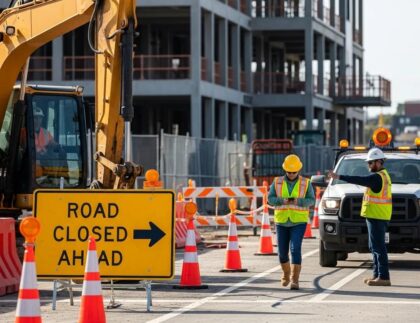
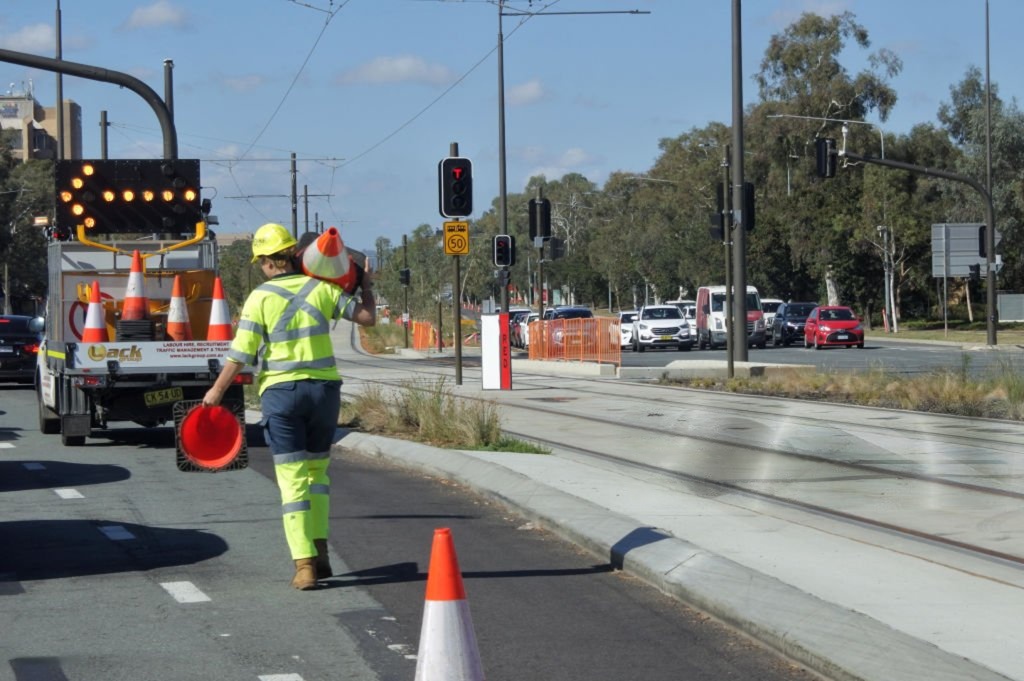
A thorough risk assessment identifies specific hazards — vehicles travelling at speed near a work zone, limited visibility around a bend, pedestrians crossing near active traffic, or workers positioned close to moving vehicles. From there, effective traffic management services translate those identified risks into practical, on-the-ground controls: traffic controllers with stop-slow bats, temporary signage, speed reduction zones, barriers, and clearly defined work zones.
Without a proper risk assessment first, traffic management controls can end up misaligned with the actual hazards present — wasting resources on low-priority risks while leaving more dangerous ones inadequately addressed. Without follow-through risk management, even the most thorough assessment is just a document sitting in a folder, doing nothing to actually protect anyone.
Common Misconceptions
“We did a risk assessment once, so we’re covered.”
A risk assessment reflects conditions at a specific point in time. As soon as circumstances change — new equipment arrives, traffic patterns shift, or the project moves to a new phase — the assessment needs to be revisited. Treating it as a one-time formality undermines the entire purpose of the exercise.
“Risk management is just about ticking compliance boxes.”
While compliance is certainly part of the picture, effective risk management is fundamentally about protecting people. Treating it purely as a paperwork exercise misses the point and can lead to genuinely dangerous gaps in safety on site.
“These are jobs for management only.”
While oversight typically sits with supervisors or safety officers, everyone on site — including traffic controllers — plays a role in recognising emerging hazards and ensuring controls remain effective day to day.
How Professional Support Makes a Real Difference
Given how interconnected these two processes are, many businesses choose to work with experienced professionals who can manage both the assessment and the ongoing management side together, rather than treating them as separate, disconnected tasks.
Professional risk assessment services bring an objective, experienced eye to identifying hazards that might otherwise be overlooked by those too close to day-to-day operations. Experienced assessors understand what to look for, how to evaluate severity and likelihood accurately, and how to document findings clearly enough that they translate directly into practical action.
From there, qualified traffic control teams can implement the appropriate controls, adjust them as conditions change, and ensure ongoing monitoring throughout the life of a project — creating a seamless link between identifying risk and actively managing it.
A Simple Way to Remember the Difference
If you’re ever unsure which term applies, use this simple distinction:
Risk assessment asks: What could go wrong, and how serious would it be?
Risk management asks: What are we doing about it, and how do we keep doing it well?
One is about understanding the problem. The other is about solving and continuing to solve it.
Final Thoughts
Risk assessment and risk management are not interchangeable terms — they are two connected stages of the same safety process. A risk assessment gives you the clear picture of what hazards exist and how serious they are. Risk management takes that picture and turns it into action, putting the right controls in place and adapting them as conditions evolve.
In environments as dynamic as road and traffic control, getting both stages right isn’t just good practice — it’s essential. A thorough, honest risk assessment paired with consistent, responsive risk management is what keeps workers safe, protects the public, and keeps projects running smoothly from start to finish.