
The Critical Need for Traffic Control for Construction Sites
In the Australian building and infrastructure industry, traffic control for construction is a fundamental pillar of workplace health and safety (WHS). Construction sites are inherently high-risk environments where heavy machinery, delivery trucks, and trade vehicles must coexist with public traffic and pedestrians. Without a professional management system, the risk of accidents increases exponentially. By partnering with a specialist like One Stop Traffic Solutions, construction firms can ensure that their sites are not only safe but also operate at peak efficiency, minimizing downtime caused by traffic-related bottlenecks.
Navigating Regulatory Compliance and Site Standards
Managing a construction site in Australia requires strict adherence to various safety codes and standards, such as the Australian Standard AS 1742.3. Every state has its own nuances, whether you are dealing with VicRoads in Victoria or DIT in South Australia.
Traffic control for construction involves more than just holding a sign; it requires:
- Detailed Risk Assessments: Identifying potential conflict points between construction vehicles and the public.
- Traffic Management Plans (TMP): Drafting complex strategies that allow for large-scale deliveries and heavy vehicle movements without halting public flow.
- Permit Management: Securing road occupancy permits from local councils to ensure your construction work can proceed legally.
Managing Heavy Vehicle Access and Deliveries
One of the most complex aspects of traffic control for construction is the management of site deliveries. Concrete pours, steel deliveries, and crane mobilizations require precise timing and space management. Professional traffic controllers manage these movements by:
- Establishing Clear Access Points: Creating designated entry and exit zones to prevent congestion at site gates.
- Spotting and Reversing Assistance: Assisting heavy vehicle drivers in navigating tight urban spaces safely.
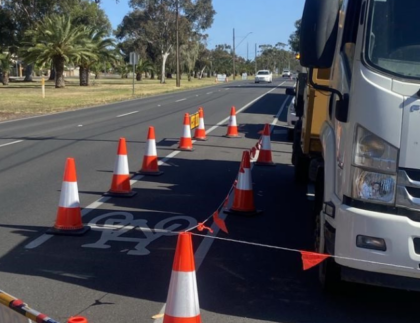
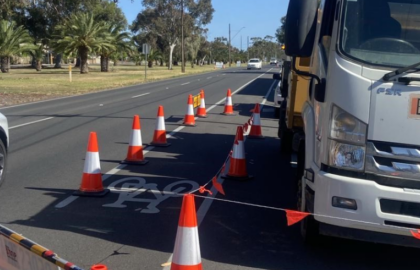
- Pedestrian Safety: Implementing exclusion zones and temporary fencing to ensure that members of the public are never in the path of heavy machinery.
The Role of Certified Personnel in Construction Safety
The human element is vital for the success of any construction project. Certified Traffic Controllers who specialize in construction work understand the unique pace of a build site. Unlike standard roadwork, construction traffic control requires constant communication with site foremen and heavy vehicle operators. Our team focuses on maintaining a “Safety First” culture, ensuring that all workers behind the barriers can focus on their jobs without worrying about the traffic outside the fence. Their expertise in radio communication and situational awareness is what prevents minor incidents from becoming major liabilities.
Essential Equipment for Construction Traffic Control
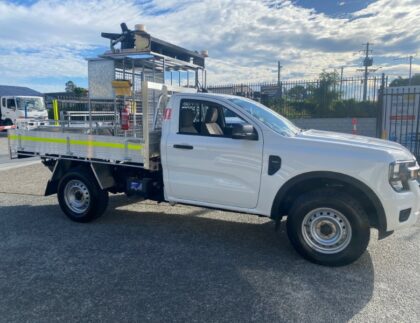
To maintain a safe perimeter, modern construction sites rely on a variety of high-visibility equipment and effective construction site traffic control measures. Depending on the scale of the build, we utilize:
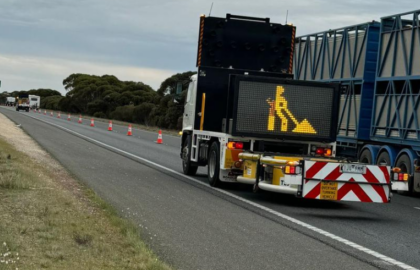
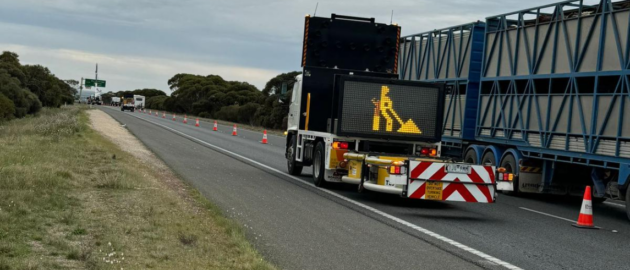
- VMS (Variable Message Signs): To alert the local community about upcoming delivery schedules or changes in road conditions.
- Physical Barriers and Bollards: To provide a hard-strike barrier between the workforce and public vehicles.
- Temporary Lighting Towers: Essential for early morning starts or late-night concrete pours, ensuring that the site remains visible to all road users. Using high-quality, well-maintained equipment is a sign of a professional construction operation and significantly reduces the risk of driver error near your site.
Increasing Efficiency and Reducing Project Costs
Some contractors view traffic control for construction as a burden on the budget, but it is actually a strategy for cost reduction. A well-managed traffic setup ensures that deliveries are not delayed, that workers are not at risk, and that the project remains compliant with all local laws. A single incident or a council-ordered work stoppage due to poor traffic management can cost a construction firm thousands of dollars per day. By investing in professional services, you ensure a smooth workflow that keeps your project on schedule and within budget.
Conclusion: Protecting Your Site and Your Reputation
In the competitive world of construction, your reputation is built on safety and reliability. Ensuring that your traffic control for construction is handled by experts is a clear signal to clients, workers, and regulatory bodies that you take your responsibilities seriously. Protecting your people and the public is not just about compliance—it’s about delivering a successful project that the whole community can support.